Granite vs Marble: Color Consistency and Defect Risk
Granite generally offers tighter color control and lower defect risk than marble. Marble delivers softer aesthetics but requires more inspection for veining, pinholes, and tonal shifts. The right choice depends on the visual tolerance and structural demands of your project.
- Granite provides tighter color control and fewer surface defects than marble.
- Marble requires closer inspection for veining, pinholes, and tonal shifts.
- Slab grade and quarry lot selection influence final cost and appearance.
- Specify acceptable variation and defect thresholds in the purchase contract.
- Inspect raw slabs before fabrication to avoid surprises during final installation.
How do granite and marble differ in color control?
Granite tends to offer tighter color control than marble. The mineral grains in granite are usually more uniform, and the overall tone often stays consistent across a single slab. This makes it easier to match adjacent pieces in large installations. The stone can still vary between quarries and even between blocks from the same quarry, but the range of variation is typically narrower. When a contractor orders multiple slabs for a long wall, the color difference between them is rarely noticeable. The stone behaves predictably under different lighting conditions as well. A grey granite slab will look grey in a north-facing room and a warm grey in a south-facing room, but the base tone remains stable. This stability reduces the risk of visual mismatch in commercial lobbies, residential kitchens, and public restrooms.
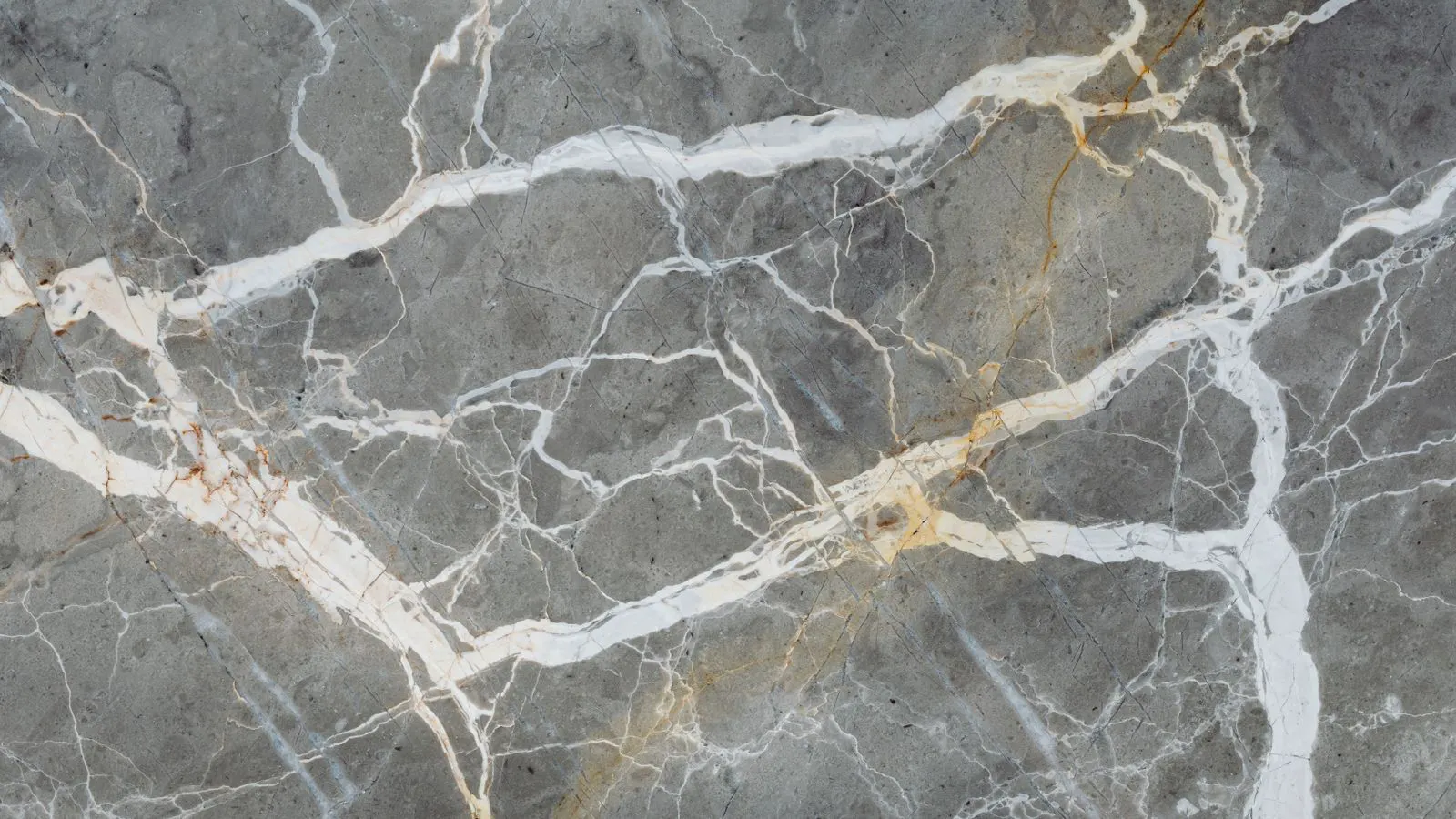
Marble presents a different challenge. The soft stone carries veins that move through the surface in patterns that cannot be predicted in advance. Even two slabs from the same quarry lot can show different vein density, angle, and color intensity. For a project that requires a smooth wall, a monolithic look, or a specific tone, this variation becomes a major consideration. A white marble slab from one end of the quarry may appear creamy, while a slab from the other end looks cold and blue. The veins can shift from fine, hair-like lines to thick, dark bands. This unpredictability requires careful selection at the quarry or from a large inventory of slabs. The buyer must see the specific pieces they will receive, not just a sample.
The difference matters most in large interior applications. A lobby floor or a long corridor can expose every shift in tone. A single marble slab may look beautiful in isolation, but a full run of material can reveal how the veining changes from piece to piece. Granite handles that scale more predictably. In a high-traffic area, where dozens of slabs are laid together, the consistency of the granite helps the floor appear as a single surface. Marble requires more effort to achieve this effect. The installer must carefully match the slabs on site, rotating them to balance the vein patterns. This process takes time and increases labor costs.
What typical defects appear in each stone?
Granite is generally harder to damage on the surface. Its crystalline structure resists scratching, etching, and minor impacts. The main defect risks are chips at the edges, cracks along natural fractures, and occasional inclusions that create visual interruptions. These flaws are usually visible during raw slab inspection. A chip in the corner of a granite slab is a common issue, especially during transport. The stone is dense, so it does not easily dent or wear down in high-traffic areas. However, if a slab contains a hidden fracture, it may split during cutting or polishing. This is why checking the edges and the back of the slab is critical.
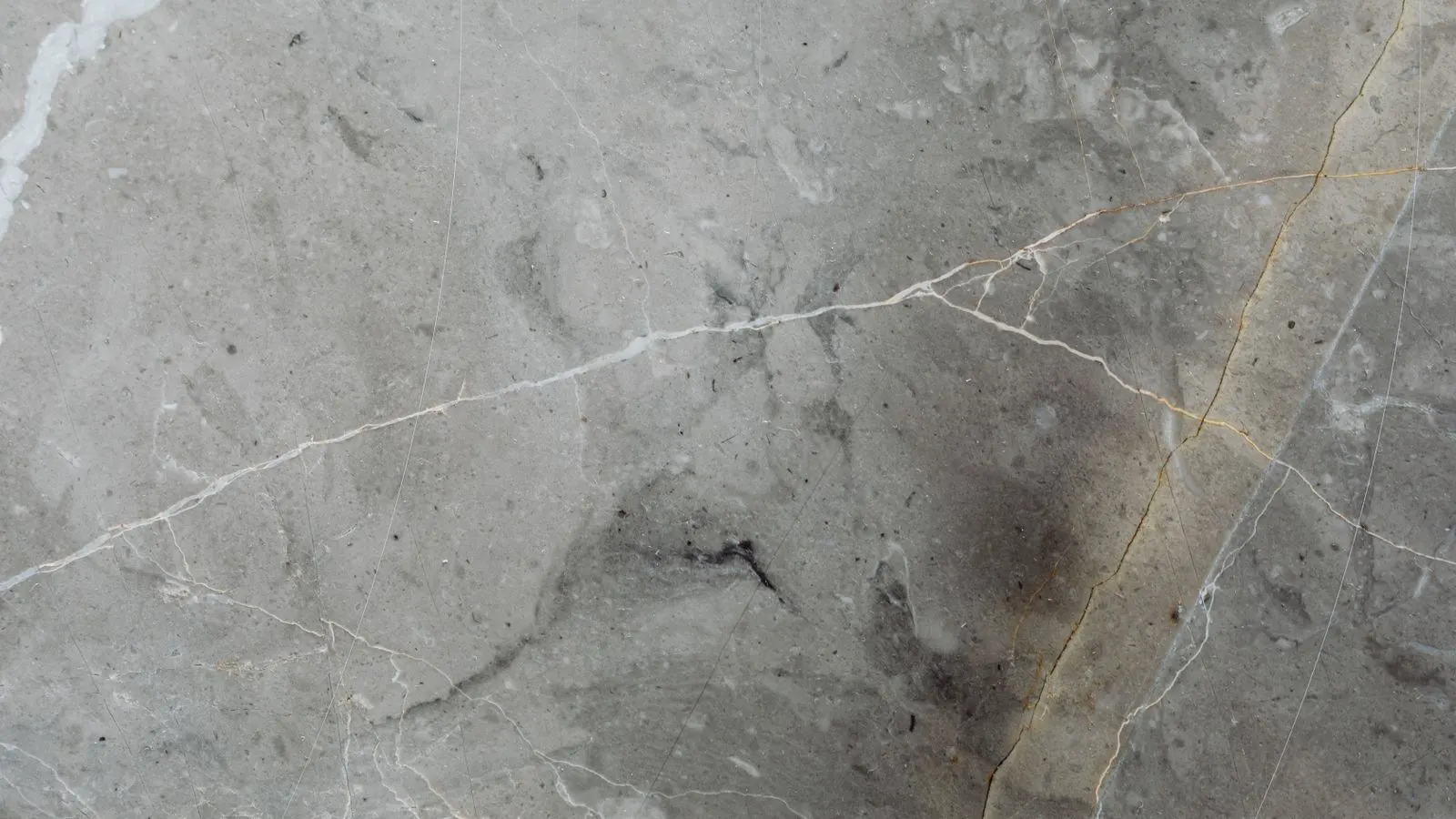
Marble is more vulnerable. The calcium carbonate matrix is softer, which makes pinholes, pitting, and surface scratches more common. Vein continuity is also a concern. A strong vein may break across a seam, creating a visual mismatch. Some quarries produce marble with small voids or pockets that require filling before the stone is usable. These voids can appear as dark spots or white patches on the surface. If not filled properly, they may become visible after polishing. Marble is also more prone to acid etching. Spills of citrus juice, wine, or vinegar can leave dull spots on the surface that are difficult to remove.
The defect profile changes with the stone type. A dense, fine-grained marble is easier to work with than a heavily veined or porous variety. Granite defects are usually structural, while marble defects are often surface related. This distinction affects both the inspection process and the cost of remediation. A cracked granite slab may need to be rejected entirely, as repairing a structural crack is rarely cost-effective. A pitted marble slab can sometimes be polished and sealed to reduce the visibility of the defects. The buyer must understand that some defects are acceptable in one stone type but unacceptable in another.
How does slab grade affect the final result?
Slab grading determines what the buyer receives. A top grade slab is selected for appearance, with fewer defects and more consistent coloring. A lower grade slab may include more character, visible flaws, or tonal variation. The grade also affects the price, because the stone is sorted after rough cutting. The grading system varies by quarry and region, but the principle remains the same. The stone is inspected, and the pieces are categorized based on their suitability for different applications.
Granite grading often focuses on color consistency, edge condition, and the presence of cracks. A top grade granite slab will have a uniform tone and clean edges. A lower grade slab might have darker spots or a slightly rougher surface. These differences are usually minor, but they can impact the final look in a high-end project. Marble grading adds more variables, such as vein quality, pinhole count, and surface defects. The same block may yield a premium slab and several lower grade pieces, depending on where the defects fall. A slab with a dramatic vein pattern might be sold as a premium decorative piece, while the surrounding stone with no veins might be downgraded for structural use.
Buyers should specify the grade in the purchase agreement. A vague request for “good quality” leaves room for interpretation. Clear language about acceptable defects, maximum pinhole count, and vein continuity reduces disputes during delivery. The grade also influences the installation method, because lower grade marble may need more finishing or reinforcement. A slab with visible voids might require a resin fill before it is polished. This extra step increases the fabrication cost. The buyer must budget for these potential issues.
What inspection checks are most useful?
A practical inspection focuses on the raw slab before it is cut to size. The buyer or inspector should look at the stone in natural light, not under artificial showroom lighting. This helps reveal color shifts and subtle surface defects. Artificial lighting can hide pinholes and make veins appear less prominent. Natural light is the best tool for assessing the true character of the stone.
For granite, check the overall tone, the presence of large inclusions, and the condition of the edges. Run a hand over the surface to feel for chips or cracks. Verify that the slab is square and free of major fractures. The goal is to confirm that the stone will hold up under cutting and polishing without hidden weaknesses. A slab that looks perfect in the showroom may split when the saw cuts through it. This is why a thorough inspection is necessary.
For marble, the inspection is more detailed. Look for pinholes, pitting, and veins that break across the slab. Check the back of the slab for voids or cracks that may affect structural integrity. Measure the pinhole count and note the location of any filling areas. The vein pattern should be reviewed against the design intent, because a strong vein may need to be placed at a specific location in the final installation. If the design calls for a continuous vein running down the center of a wall, the inspector must ensure that the slab contains that pattern.
A written inspection report is useful. It should record the slab number, the defects found, and the acceptance decision. This document protects both the buyer and the supplier during the fabrication and installation phases. Without a written record, disputes can arise if a defect is missed during the initial inspection but becomes visible after installation. The report should be signed by both parties. It serves as a baseline for the quality of the stone received.
When should you choose one over the other?
The table below summarizes the trade-offs.
| Option | Best for | Limitations |
|---|---|---|
| Granite | Large areas, high traffic, tight color matching | Less natural variation, can feel uniform |
| Marble | Decorative accents, fine interior features, soft aesthetics | Higher defect risk, softer surface, more variation |
| Engineered granite | Uniform color, high durability, limited defect exposure | Less natural character, higher cost |
| Engineered marble | Consistent look, reduced defect risk | Higher cost, less authentic feel |
| Single slab marble | Statement pieces, unique vein patterns | Costly, limited quantity, harder to match later |
Granite is the safer choice for floors, countertops, and exterior applications. Its hardness and tight color control make it well suited to high use and large scale. If the project requires a predictable appearance, granite is usually the better fit. It handles heat and moisture better than marble. It does not require as much maintenance. A granite countertop in a busy kitchen will last for decades with minimal care. A marble countertop in the same location will show scratches and etching within a few years.
Marble is the better choice when the design depends on natural variation. A marble wall, fireplace surround, or feature counter benefits from the movement in the stone. The defect risk is higher, but the visual payoff is significant. The key is to accept the variation as part of the design rather than trying to eliminate it. Marble adds warmth and softness to a space. It reflects light differently than granite, creating a softer visual effect. In a luxury hotel lobby or a high-end residential bathroom, marble can elevate the overall aesthetic.
Engineered options sit in the middle. They reduce defect risk and improve color consistency, but they change the character of the stone. Some buyers want that control, while others prefer the natural look. The decision depends on the project goals and the budget. Engineered stone is made by cutting small pieces of natural stone and bonding them with resin. It is stronger and more uniform than natural stone, but it does not have the same depth of color or variation. The resin layer can wear down over time, requiring replacement.
How to specify the stone to avoid surprises
The purchase contract should define the stone clearly. Name the quarry lot, the slab grade, and the accepted defect thresholds. For marble, include the maximum pinhole count per square meter and the acceptable vein continuity. For granite, specify the tone range and the maximum size of visible inclusions. These details prevent ambiguity. If the contract does not specify the pinhole count, the supplier can deliver a slab with many small pits and claim that it meets the “acceptable quality” standard. A clear specification eliminates this risk.
The contract should also cover inspection rights. The buyer should have the right to inspect the raw slabs before fabrication. If the stone is rejected, the terms for replacement or credit should be clear. This step prevents disputes that are common in stone projects. The inspection should take place at the quarry or the supplier’s warehouse. The buyer or their representative should be present. If the buyer is not present, the supplier must provide photographs and a detailed description of the slab. This document should be attached to the contract.
Finally, match the stone to the installation method. A marble floor needs different protection than a marble countertop. Granite is more forgiving, but the finishing method still affects the final appearance. The specification should include the polish type, the edge profile, and the installation method. A honed finish is more durable than a polished finish because it hides scratches. A polished finish is more reflective and creates a smoother surface. The edge profile affects the safety and visual appeal of the countertop. A mitered edge is common in modern designs, while a beveled edge is traditional.
The choice between granite and marble is not about which stone is better. It is about which stone fits the project. Granite offers control and durability. Marble offers character and softness. The buyer who specifies the stone clearly and inspects it carefully will get the result they need. The stone is a permanent part of the building. A mistake made during the selection phase cannot be easily fixed. The time invested in planning and inspection will save money and frustration in the long run.
Frequently asked questions
Which stone is easier to match for large installations?
Granite is easier to match because the color is usually more consistent. Marble requires more care to match vein patterns and tone across multiple slabs.
How does marble defect risk affect cost?
Higher defect risk can increase cost because more slabs may need to be rejected, filled, or upgraded. The inspection process also takes more time.
Can marble be used in high traffic areas?
Yes, but it requires more protection and maintenance than granite. The soft surface is more prone to scratching and etching.
What is the best way to inspect marble slabs?
Inspect the raw slab in natural light, check for pinholes and vein breaks, and review the back for voids or cracks. A written report is useful.
Should I buy from a single quarry lot?
Buying from a single lot helps with color consistency. It also makes it easier to match the stone during fabrication and installation.