Understanding 30mm vs 40mm Stone Slab Thickness
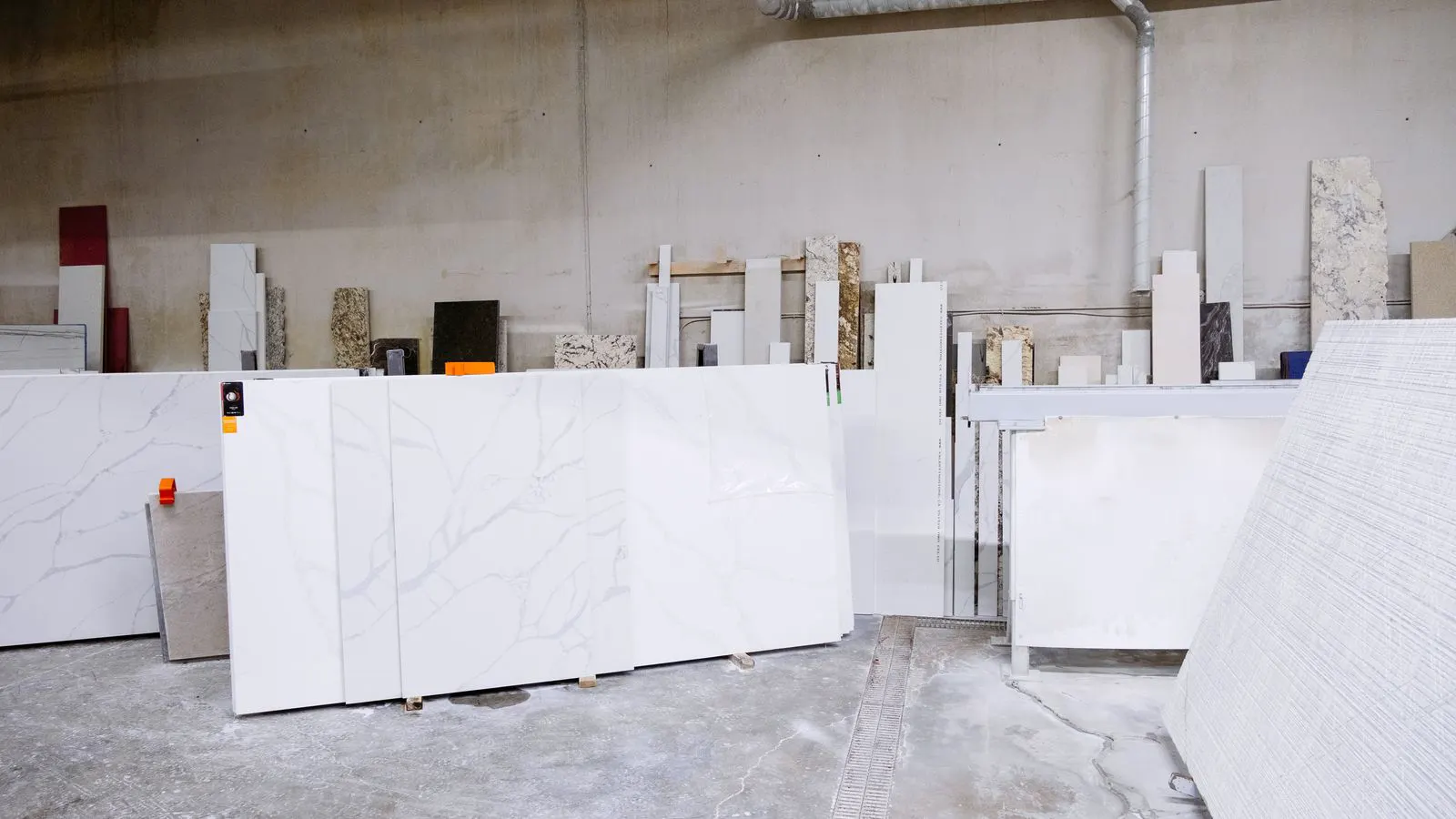
Stone slab thickness affects strength, edge finishing, and installation. Thicker slabs offer better support and cleaner cuts, while thinner options reduce cost and weight. Select based on span, load, and finish.
- 30mm slabs suit shorter spans and lighter applications where weight and cost matter.
- 40mm slabs provide greater edge strength and support for longer spans and heavier finishes.
- Thickness affects edge profiles, cutting yield, and how the stone sits in the substrate.
- Always match slab thickness to the support system and intended use, not just appearance.
- Check supplier cut sizes and edge treatment before finalizing the selection.
Why Slab Thickness Matters in Natural Stone Projects
Stone slab thickness is more than a number on a delivery note. It shapes how the material behaves under load, how edges are finished, and how the finished surface sits on the substrate. The two most common thicknesses for wall and counter applications are 30mm and 40mm, and choosing between them requires attention to mechanical performance, aesthetics, and sourcing logistics.
These thicknesses are not interchangeable. A 30mm slab may look identical to a 40mm slab from a distance, but the difference becomes obvious when edges are profiled, when the slab spans a gap, or when a heavy load rests on it. The choice also influences how much usable stone is available after cutting and what finishing options the fabricator can offer without risking the edge.
For buyers and engineers, the decision rests on three practical questions. What span will the slab cover? What edge profile is required? What is the support system beneath the stone? Answering these questions clearly usually points to the right thickness without overcomplicating the selection.
How Thickness Affects Mechanical Performance
Stone is anisotropic. Its strength varies depending on grain direction, layering, and internal flaws. Thickness changes the section modulus of the slab, which directly influences how much load it can carry before deflection or breakage occurs.
A thicker slab has a greater depth. That depth increases resistance to bending. For a cantilevered countertop or a large wall panel, the additional thickness of a 40mm slab gives the fabricator more margin for error. The edge is less likely to chip during handling, and the slab can span a wider gap between support points without excessive sag.
A 30mm slab is lighter and easier to carry. This reduces stress on the installer and the substrate. However, the thinner section offers less resistance to bending. If the slab spans more than a few inches between supports, or if it is subject to point loads, the risk of cracking increases. The material must also be free of significant internal stress or layering to perform safely at this thickness.
In practice, 40mm slabs are preferred for long counters, heavy work surfaces, and applications where the edge will be exposed and handled frequently. 30mm slabs are commonly used for shorter spans, wall cladding, and decorative applications where the slab is closely supported.
Aesthetic Differences Between 30mm and 40mm Slabs
Thickness changes how a slab reads visually. A 30mm slab has a lighter profile. The edge appears sharper, and the stone seems more delicate. This can enhance the perception of a refined finish, especially in minimalist interiors where visual weight is a concern.
A 40mm slab carries more visual mass. The edge feels solid, and the stone reads as a substantial material. For commercial kitchens and high-traffic areas, this sense of durability aligns with the functional expectation. The thicker edge also allows for more pronounced profiles, such as a eased edge or a chamfer, without exposing a thin, fragile rim.
Edge finishing is a major aesthetic factor. A 30mm slab can be polished to a fine edge, but the margin for error is small. A 40mm slab can support a deeper profile while still retaining a clean, strong edge. The choice of profile often follows the thickness. If the design calls for a bold edge, 40mm is usually the safer choice. If the design favors a thin, crisp line, 30mm may be more appropriate.
Another visual consideration is the way the slab sits on the substrate. A 40mm slab creates a thicker joint line at the perimeter. This can be an advantage when the edge is visible, as it adds a defined border. A 30mm slab creates a tighter joint, which can make the surface appear more integrated with the cabinetry or substrate.
Sourcing and Fabrication Implications
Sourcing decisions are influenced by thickness in several ways. Quarry blocks are cut into slabs, and the thickness of the final slab determines how much block material is used. A 40mm slab uses more material per square meter than a 30mm slab. This affects cost, even when the stone type is the same.
Fabrication also changes. Cutting a 30mm slab requires different support and attention to edge integrity. The thinner section is more susceptible to chipping during sawing and polishing. A 40mm slab is more forgiving, but it takes longer to cut and polish due to its mass. The fabricator must account for this in lead time and labor cost.
Yield is another factor. When a slab is cut into tiles or custom shapes, the thickness influences the amount of waste. A 40mm slab may produce more offcuts that are difficult to use because of their size and weight. A 30mm slab may allow for smaller offcuts that can be used for secondary applications, such as backsplashes or small feature pieces.
Supplier availability varies by stone type and region. Some stones, such as dense granites, are commonly supplied in 40mm slabs. Others, such as certain marbles or limestones, may be more readily available in 30mm. It is useful to confirm the standard thickness offered for a specific stone before finalizing the design. If a 40mm slab is not readily available, the project may face delays or a change in stone selection.
A Worked Example in Plain Words
Imagine a commercial kitchen with a long stainless steel counter. The counter runs 3 meters between support brackets. The design calls for a polished granite top with a small eased edge. The engineer needs to decide whether to specify 30mm or 40mm slabs.
At 30mm, the slab is lighter and the edge profile is subtle. However, the 3-meter span between brackets is long for a thin slab. The engineer must verify that the support system provides frequent backing. Without adequate support, the slab may deflect under the weight of cookware or a heavy pot. The edge may also chip during delivery or installation because of its thinness.
At 40mm, the slab is heavier but stronger. The same 3-meter span is more manageable. The eased edge is cleaner and more durable. The engineer can place support brackets at standard intervals without worrying about excessive deflection. The slab also handles point loads better, which matters in a busy kitchen.
The decision here favors 40mm. The span, the load, and the edge profile all point to the thicker option. The cost difference is offset by reduced risk and longer service life. If the counter were only 1 meter long and supported at both ends, 30mm might be acceptable. The same stone, the same finish, but a different structural requirement changes the thickness selection.
Standards, Tolerances, and Common Mistakes
There is no single global standard that mandates a specific slab thickness for all applications. Different regions, stone types, and industry bodies may recommend ranges. These ranges are guided by the stone’s mechanical properties and the intended use. A buyer should not rely on a single number without understanding the context.
Common mistakes include selecting thickness based only on appearance. A thinner slab may look lighter and more refined, but it may not perform well in the intended application. Another mistake is ignoring the support system. A 30mm slab can work well if the substrate provides frequent support. The same slab will fail if left unsupported over a long span.
Tolerances are another issue. Slabs are not perfectly uniform. Thickness can vary across the surface. A 40mm slab may measure 38mm in one area and 42mm in another. This variation must be accounted for in edge finishing and substrate preparation. A fabricator will often grind or cut the slab to a consistent thickness before installation.
Buyers should also check how the thickness affects the edge profile. Some profiles are standard for 40mm slabs but difficult to achieve cleanly on 30mm slabs. The edge may end up too thin or uneven. Confirming the edge detail with the fabricator before ordering prevents surprises.
Decision Framework for 30mm vs 40mm Stone
The following table summarizes the key differences between the two thicknesses. It is a practical reference for early-stage selection.
| Factor | 30mm Slab | 40mm Slab |
|---|---|---|
| Span | Short spans, frequent support | Longer spans, less frequent support |
| Load | Light to moderate | Moderate to heavy |
| Edge Profile | Subtle, fine profiles | Bold, deeper profiles |
| Weight | Lower, easier to handle | Higher, requires more support |
| Visual Feel | Lighter, refined | Solid, substantial |
| Sourcing | May be common for softer stones | Common for dense granites |
| Fabrication | More sensitive to chipping | More forgiving, longer cut time |
Use this table as a starting point, not a final rule. The stone type, the support system, and the edge detail will always take precedence. A dense granite at 30mm may perform better than a layered marble at 40mm in the same application. The material properties matter as much as the thickness number.
When in doubt, lean toward the thicker slab. The additional cost is usually modest compared to the risk of failure. A 40mm slab is easier to install, easier to finish, and easier to support. It also ages better in high-traffic areas. The 30mm slab is a specialist option for specific applications where weight and profile are more important than structural margin.
Final Considerations for Professional Buyers
The choice between 30mm and 40mm stone slab thickness is a technical decision with clear consequences. It affects the structural behavior of the installation, the aesthetic quality of the edge, and the logistics of sourcing and fabrication. There is no universal answer. The right thickness depends on the span, the load, the support system, and the desired finish.
For commercial projects, the engineer should specify the thickness based on the structural drawing. The fabricator should confirm that the stone type is suitable for the selected thickness. The buyer should verify the edge profile and the support intervals. These three checks, done early, prevent the most common issues in stone installations.
The 30mm and 40mm options are both mature and widely available. Neither is inherently better. The difference lies in the application. Selecting the correct thickness is not about choosing the thickest slab available. It is about matching the material to the structural and aesthetic requirements of the project. When this match is clear, the installation is stronger, cleaner, and more durable.
Frequently asked questions
Can a 30mm slab be used for a long counter?
Yes, but only if the support system provides frequent backing. Without adequate support, a 30mm slab may deflect or crack under load.
Is 40mm stone always stronger than 30mm stone?
Generally, yes, because the greater section depth increases resistance to bending. However, stone type and internal flaws also affect strength.
How does thickness affect the edge profile?
Thicker slabs support deeper and more pronounced profiles. Thinner slabs are limited to subtle profiles to avoid weakening the edge.
Is there a standard thickness for all natural stone?
No. Thickness recommendations vary by region, stone type, and application. There is no single global standard.
Which thickness is cheaper?
A 30mm slab uses less material per square meter, so it is often less expensive. However, sourcing availability and fabrication time can change the cost.